


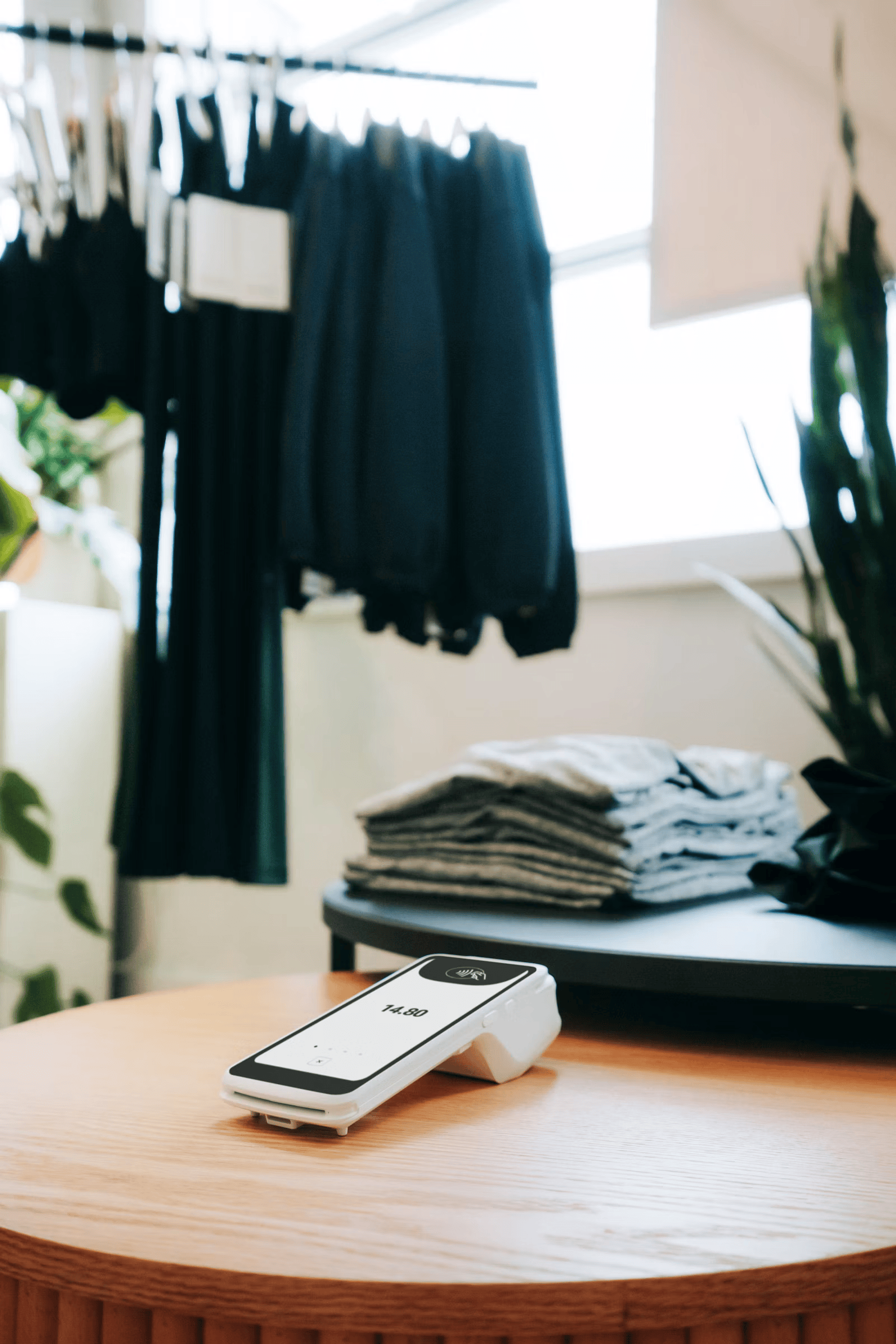
A till in each outlet. A spreadsheet stitching them together. A manager hoping the numbers reconcile by month end. That's how multi-store retail used to run - and it's no longer good enough. A modern Retail POS Software platform has to connect every store, warehouse, customer and sales channel through a unified system.
Here's what to actually look for.
-
01
Centralized Multi-Store Management
For retailers operating multiple locations, a unified retail software platform makes it possible to manage stores, products, pricing, users and operations centrally. Retailers shouldn't need a separate system, or a separate login, for every location they open.
-
02
Online and Offline POS
Billing shouldn't stop because the internet did. A POS built for real stores keeps ringing up sales offline and syncs the moment connectivity returns, so a bad connection never becomes a closed till.
-
03
Real-Time Inventory Management
With omnichannel inventory management, retailers can maintain visibility of stock across stores, warehouses and fulfillment locations. That's what makes replenishment and order-fulfilment decisions accurate instead of reactive.
-
04
Omnichannel Retail
A customer today might buy in-store, on the website, or through an app - often the same customer, the same week. The POS needs to work as part of an omnichannel retail software platform where orders, inventory and customer information remain synchronized across channels.
-
05
Mobile POS and Queue Busting
Associates shouldn't be tied to a fixed counter. Mobile POS lets staff scan, assist, and check out customers anywhere on the floor - often the fastest way to cut a queue without adding a counter.
-
06
Self-Checkout
A self-checkout option gives customers a faster path through high-volume periods, but only if it's genuinely integrated with the rest of store operations - not a bolt-on system reporting into a different back office.
-
07
Customer Loyalty and CRM
Purchase history, loyalty points, and offers should live inside the same system as the transaction, not a separate CRM the POS has to be reconciled against. That's what turns a purchase into a personalized one.
-
08
Warehouse Integration
Stores and warehouses should behave like one connected inventory, not two departments emailing spreadsheets at each other. Transfers, fulfilment, and stock movement need to flow automatically in both directions.
-
09
Remote Store Management
With enough outlets, a manager can't be everywhere. Remote configuration and monitoring - devices, users, store activity - lets a head office actually run the network instead of just collecting reports from it.
-
10
Retail Analytics and AI
A modern POS should do more than log what was sold. Sales trends, customer behaviour, inventory insight, and AI-driven analytics are what turn transaction data into a decision retailers can act on.
-
11
Multiple Device Platforms
Store hardware is rarely uniform across a chain. A platform that runs on Windows, Android, and iOS gives retailers the flexibility to deploy whatever hardware each location actually needs - not whatever the software happens to support.
-
12
Cloud-Based Architecture
None of the above works without a cloud foundation underneath it. Cloud architecture is what lets POS, inventory, warehouse, eCommerce, and analytics operate as one system - without every store maintaining its own server room.
From billing system to operations platform.
The traditional POS existed to do one thing: billing. The modern POS is becoming something else entirely - a connected retail operations platform, spanning:
Retail Clouds brings these capabilities together as a complete retail software platform, connecting POS, inventory, warehouse management, eCommerce, customer loyalty, self-checkout and AI-powered retail analytics through one cloud platform.
So for any retailer evaluating a new POS, the question worth asking has changed. It's no longer:
"Which POS can process my transactions?"
It's:
"Which platform can connect my entire retail operation?"