


Picture a Friday evening at your favourite supermarket. The aisles are full, baskets are overflowing, and the billing counters have a line snaking halfway down the store. For the customer, every extra minute in that line chips away at an otherwise good shopping experience. For the retailer, it's a silent revenue leak - abandoned carts, frustrated loyalty members, and shoppers who quietly decide to try the store down the road next time.
Customer experience is paramount, and few things damage it faster than a slow checkout. Research and retail experience both point to the same threshold: if a customer has to stand in a queue for more than five minutes on a busy evening, satisfaction drops sharply - and so does the likelihood of a repeat visit. This is exactly the problem queue busting was built to solve.
What Is Queue Busting?
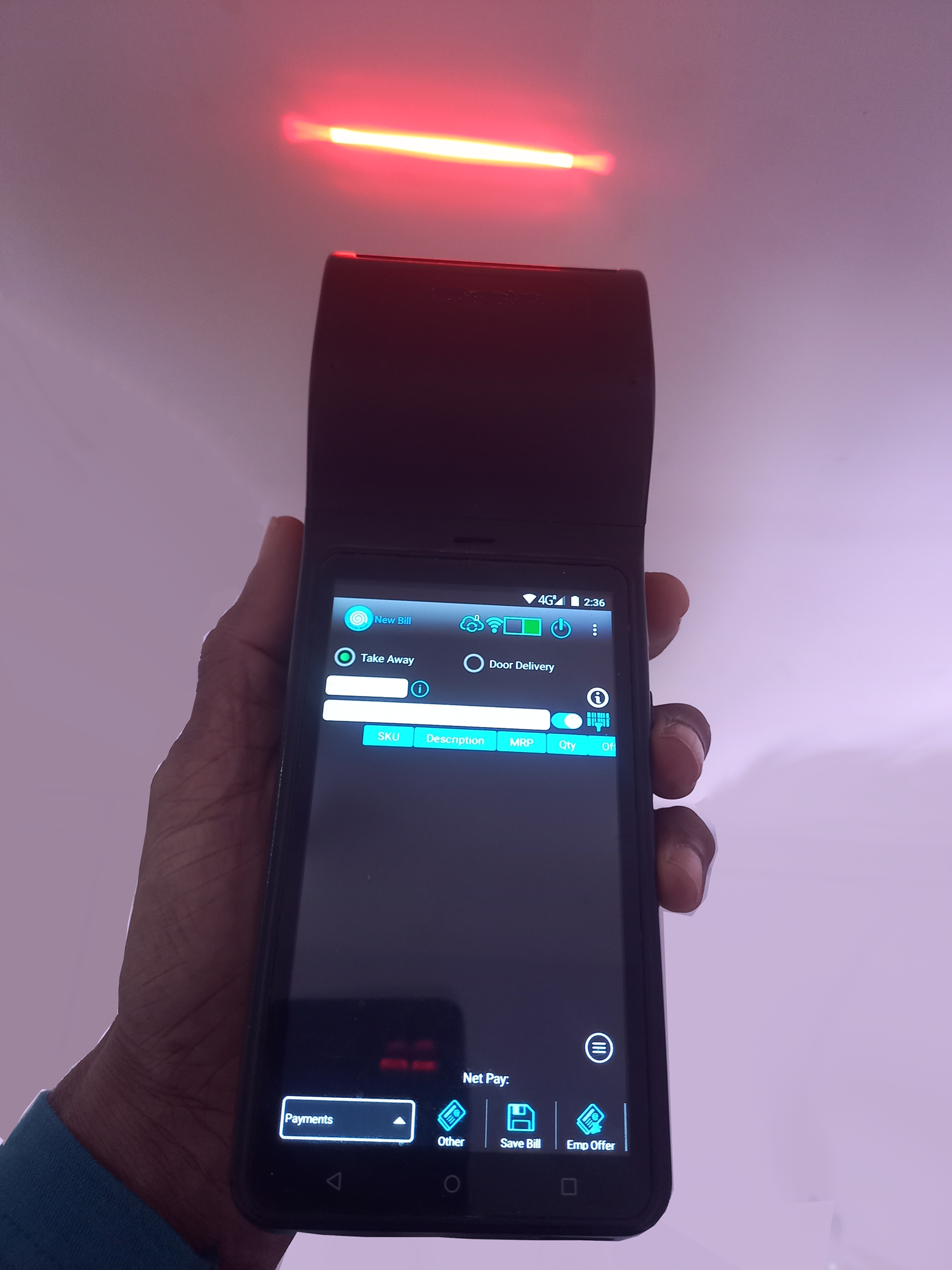
Queue busting is the practice of taking the checkout to the customer, rather than making the customer wait for the checkout. Instead of being confined to a fixed billing counter, store staff carry handheld POS devices - mobile computers with barcode scanners and card/UPI payment capability - directly onto the floor. They scan items, apply discounts, and close the sale on the spot, right where the queue is forming.
For a modern supermarket, this isn't a nice-to-have anymore. It's a must-have. Peak-hour crowding, rising customer expectations, and the sheer competitiveness of retail today mean that queue busting has moved from "innovative pilot" to "operational necessity."
The Minimum Requirements of a Real Queue Busting System
Not every handheld scanner qualifies as a queue busting solution. To genuinely reduce wait times without creating new problems - pricing errors, payment failures, or disconnected loyalty records - a system needs to meet a clear set of requirements.
Up-to-Date Master Data
The handheld device is only as reliable as the data behind it. Product codes, prices, tax rates, and stock information must sync with the central system in real time. A queue-busting unit running on stale master data creates more problems than it solves - mismatched prices at the counter erode the very trust the system is meant to protect.
Support for Promotions and Discounts
Supermarkets run promotions constantly - seasonal offers, loyalty-tier discounts, bundle deals, clearance pricing. A queue busting device must apply these automatically and correctly, exactly as the main POS would. Customers shouldn't get a different (and worse) deal just because they were served on the floor instead of at a counter.
Access to Customer Database and Loyalty Programs
Loyalty points, membership tiers, and personalised offers are a major driver of repeat business. If the handheld device can't pull up a customer's loyalty profile and apply the right benefits, the store isn't just slowing down billing - it's breaking the loyalty experience too.
Support for All Standard Payment Options
Today's shoppers pay in a mix of ways - cards, UPI, wallets, and cash. A queue busting device needs to support the same range of payment options as a fixed POS terminal. Anything less forces customers back into a line anyway, defeating the entire purpose.
True Portability
A queue busting device has to go where the queue is - whether that's the dairy aisle, the entrance, or a pop-up counter during a flash sale. It needs to be lightweight, battery-efficient, and rugged enough for a full shift of continuous use across the store floor.
Fast, Reliable Performance
Speed is the entire point. If a handheld device is slower than the counter it's meant to replace, staff and customers alike will abandon it within a week. Billing needs to feel instantaneous - quick scans, quick calculations, quick payment confirmation.
Online and Offline Capability
Networks fail. Wi-Fi drops. Mobile data gets patchy in certain corners of a large-format store. A queue busting system must be able to continue billing in offline mode and sync transactions the moment connectivity returns, so a network hiccup never becomes a checkout outage.
See Retail Clouds in action
Get a live walkthrough of how Retail Clouds connects your online, mobile and in-store sales channels through one omnichannel retail platform.
Request a Live DemoWhy This Matters More Than Ever
Modern supermarkets are competing on experience as much as on price and product range. A long queue is one of the most visible - and most avoidable - points of friction in that experience. Queue busting, done right, turns a bottleneck into a moment of good service: staff meeting customers where they are, closing the sale quickly, and freeing up fixed counters for shoppers with fuller carts.
The technology itself has matured too. Handheld billing devices today are compact enough to operate one-handed, powerful enough to run a full retail stack - SKU lookup, promotions engine, loyalty integration, and multi-mode payments - and resilient enough to keep working even when connectivity isn't perfect.
A five-minute queue that used to cost you customers can become a five-second interaction that keeps them coming back.
The Takeaway
Queue busting isn't just about adding a gadget to the store floor. It's about making sure that gadget is backed by the same data, promotions, loyalty logic, and payment flexibility as the rest of your retail operations - with the speed and reliability to actually earn its place in a busy aisle. Get those seven requirements right, and the queue stops being a cost of doing business.