


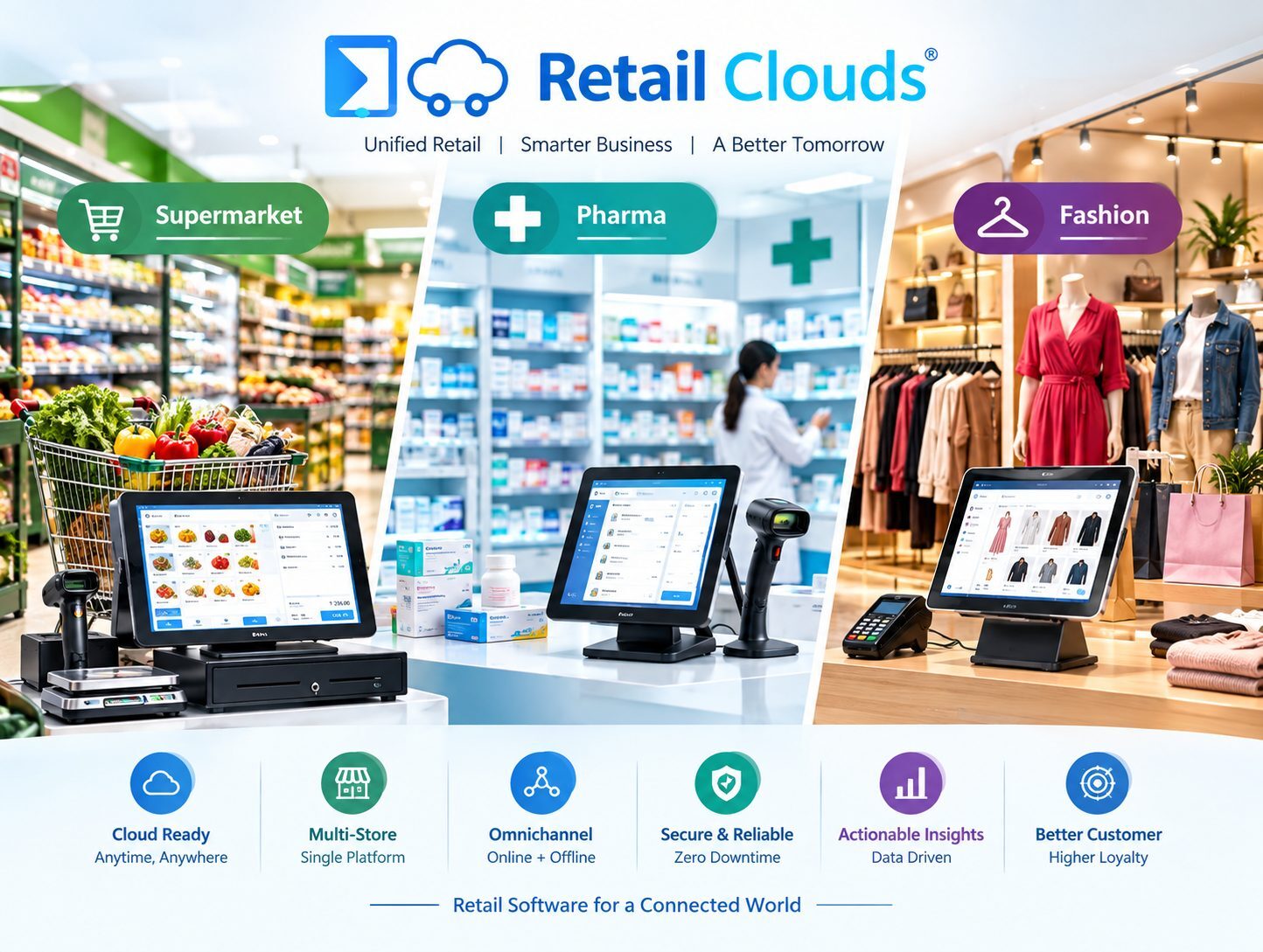
Core platform requirements
Most of what a retail chain needs is common across verticals, and it should start with disciplined procurement. Look for a single, unified platform that covers all of the following - in other words, a true omnichannel platform rather than a set of disconnected tools.
Vertical-specific requirements
Beyond the core platform, each vertical has its own must-haves. Here's what to check for as you evaluate software against your specific business.
01Grocery & Supermarkets
- Mobile-device support for queue-busting, pick lists, and stock verification.
- Ability to handle multiple prices and stock levels for the same product.
- Support for both B2B and B2C billing.
- Offline mode at the store front, so the till keeps running if connectivity drops.
- All sales channels unified and seamless.
- Fast POS response - scan time under one second.
- A strong promotions engine.
- Door-delivery capability.
02Apparel & Fashion
- Support for product matrices (size/color variants) - not every platform handles this well.
- Inventory visibility across all locations, so customers can buy from and return to any store.
- Customer behavior analysis and prediction, to empower sales staff.
- Tools to measure individual sales-associate performance.
- Campaign management with measurable performance tracking.
- All sales channels unified and seamless.
- A customer loyalty engine - close to essential for fashion retail.
03Luxury & Lifestyle
High-value items and designer wear - think Rolex or Swarovski - need extra care.
- Every item tagged with an ID and individually tracked.
- Warranty and after-sales service management.
- Support for service management more broadly.
- Customer loyalty tracking and behavioral analysis.
- Orders against partial or full payment.
- Support for custom, made-to-order products.
04Food & Beverage (F&B)
Spans both fine dining and quick-service restaurants (QSR), each with its own needs.
- Dynamic menu creation.
- Add-on support for QSR ordering.
- Integration with F&B delivery aggregators.
- Kitchen Order Ticket (KOT) support.
- Bill of Materials (BOM) and material-consumption recording.
05Wellness
A mix of products and services, where service delivery depends on booking and fulfillment.
- Facility and calendar management.
- Bookings and cancellations.
- Customer feedback and ratings.
- Material consumption (BOM) tracking against each service delivered.
06White Goods
- Warranty tracking for every item, in both warehouse and outlet.
- Full warranty management.
- Support for supplier - and brand-specific discounts.
- Service management for items already sold.
07Pharma
Comes with the strictest requirements of any vertical, including how expired stock is handled.
- Batch management and ageing.
- Returns processing for expired batches.
- Controls that block expired drugs from being sold at the POS.
- Vendor-specific discounts applied at goods receipt (GRN).
- Label printing, now a standard requirement in pharma retail.
08Meat & Vegetables
Both categories have a short shelf life, so the software has to help cut waste while keeping quality up.
- Batch creation for every stock procurement.
- Configurable shelf life for each product.
- Stock verification and routine disposal of expired stock.
- FIFO enforcement during transfers and sale.
Beyond the checklist
Modern retail is also starting to demand more specialized, AI-driven capabilities - customer behavior analysis powered by AI, virtual shopping experiences, and self-checkout. These are worth asking about even if they aren't yet core requirements for your business.
Want to see how Retail Clouds covers these requirements for your business?