


What makes fashion retail software different?
Fashion retail is fundamentally different from many other retail businesses. A fashion retailer is not simply selling products and processing transactions. The retailer must continuously manage changing collections, styles, sizes, colors, seasons, promotions, inventory across multiple outlets, customer preferences and increasingly complex online and offline customer journeys.
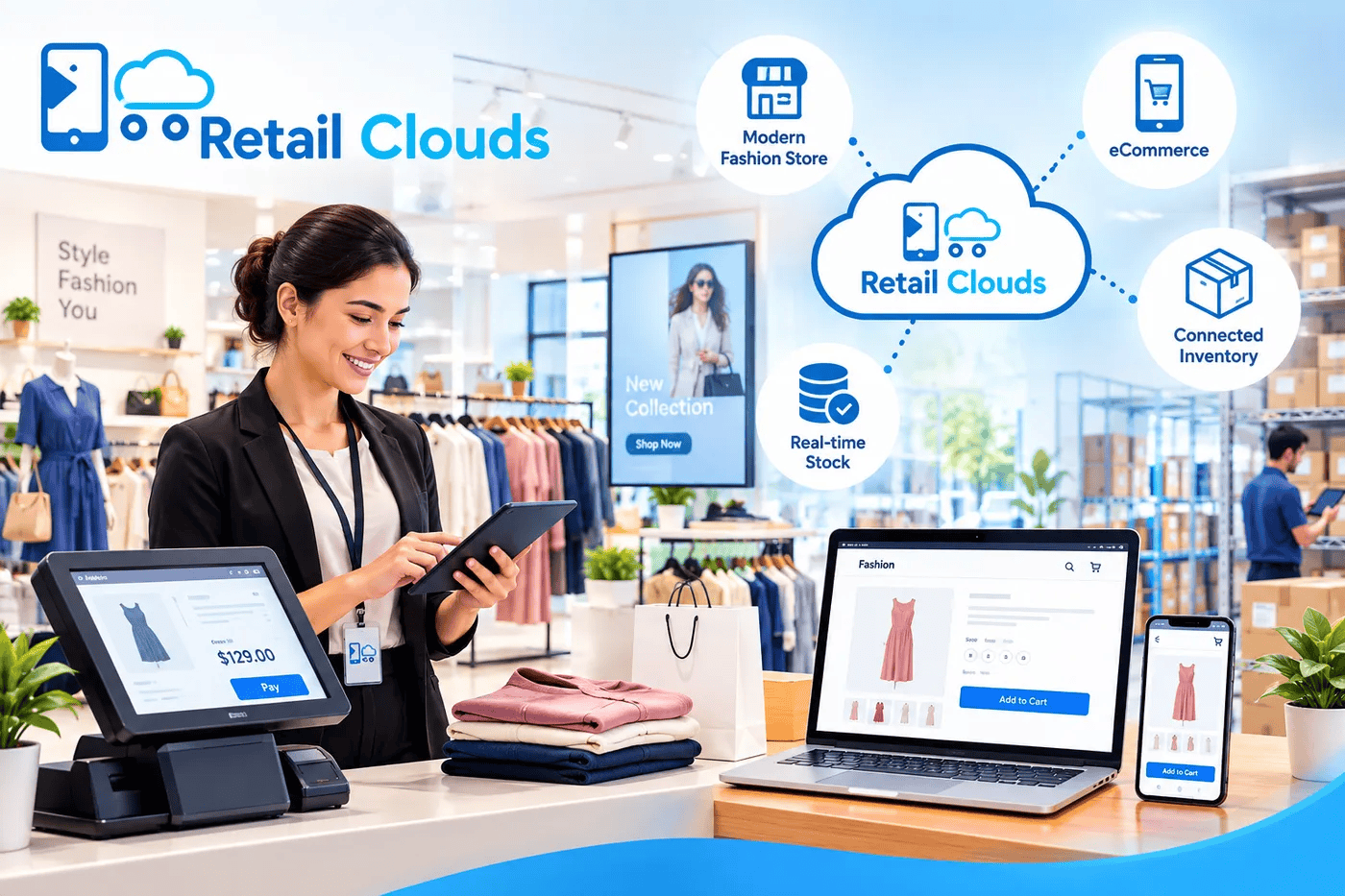
That is why fashion retail software cannot be treated simply as POS and billing software. A modern fashion retailer needs a connected technology platform that brings together POS, inventory, product management, customer engagement, store operations, eCommerce, omnichannel commerce, analytics and artificial intelligence.
1. Standard requirements
Below are the minimum requirements a fashion retail software must have.
1.1 Support for large and fast-changing product catalogs
Fashion retailers require software capable of managing very large product catalogs. New products and collections can be introduced frequently, while older products may be discontinued, discounted or moved between stores.
- High-volume product master management
- Fast product creation and updates
- Product attributes and variants
- Brand and category management
- Season and collection management
- Size and color management
- Product matrix management
- Barcode and SKU management
- Price and promotion management
Product matrix is critical
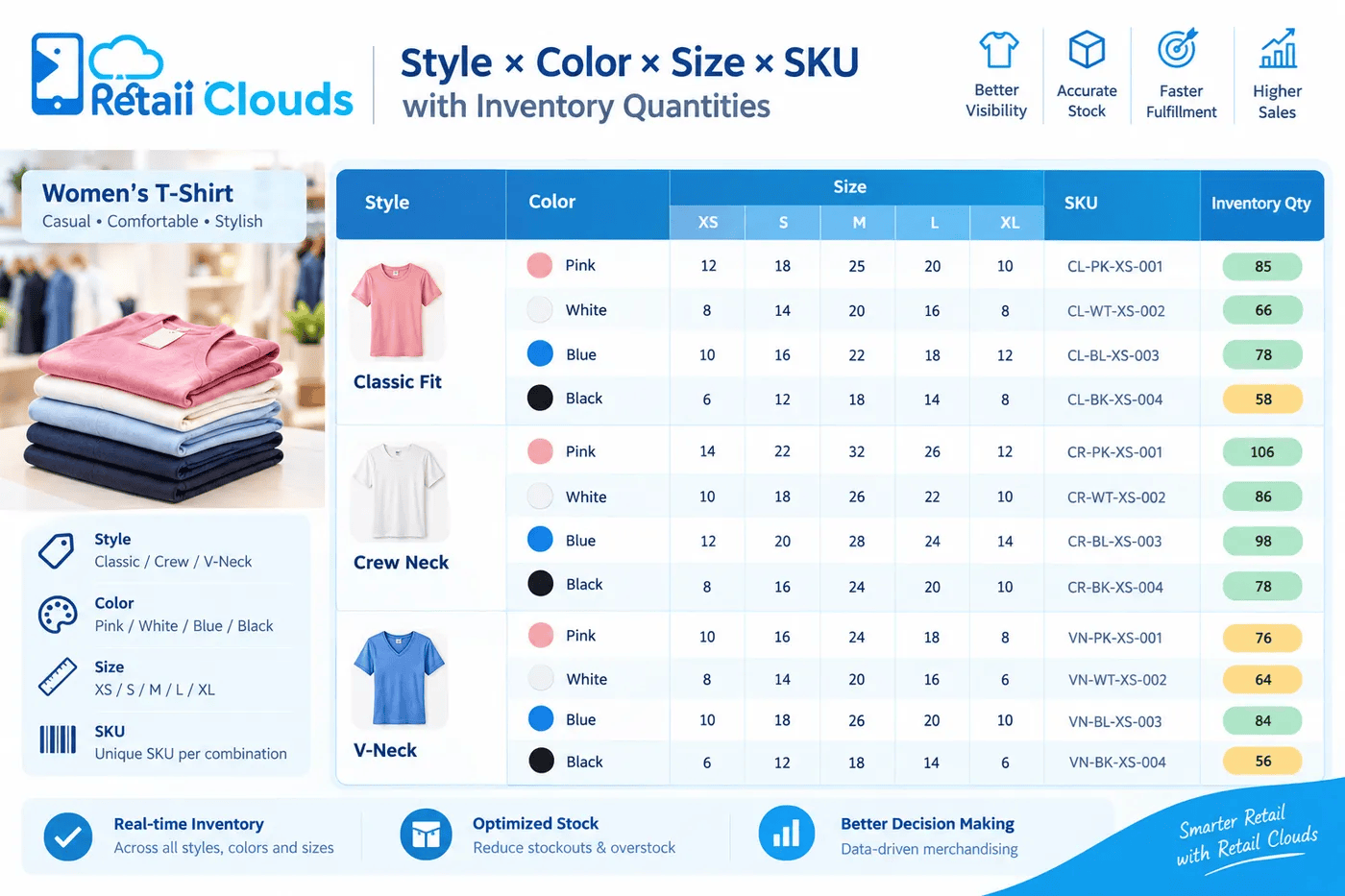
A fashion product is often defined by multiple dimensions. For example: T-Shirt → Brand → Style → Color → Size. A single fashion product can therefore generate many SKU combinations. The product master should be designed around this product matrix, rather than treating every SKU as an isolated product.
1.2 Real-time inventory visibility across stores
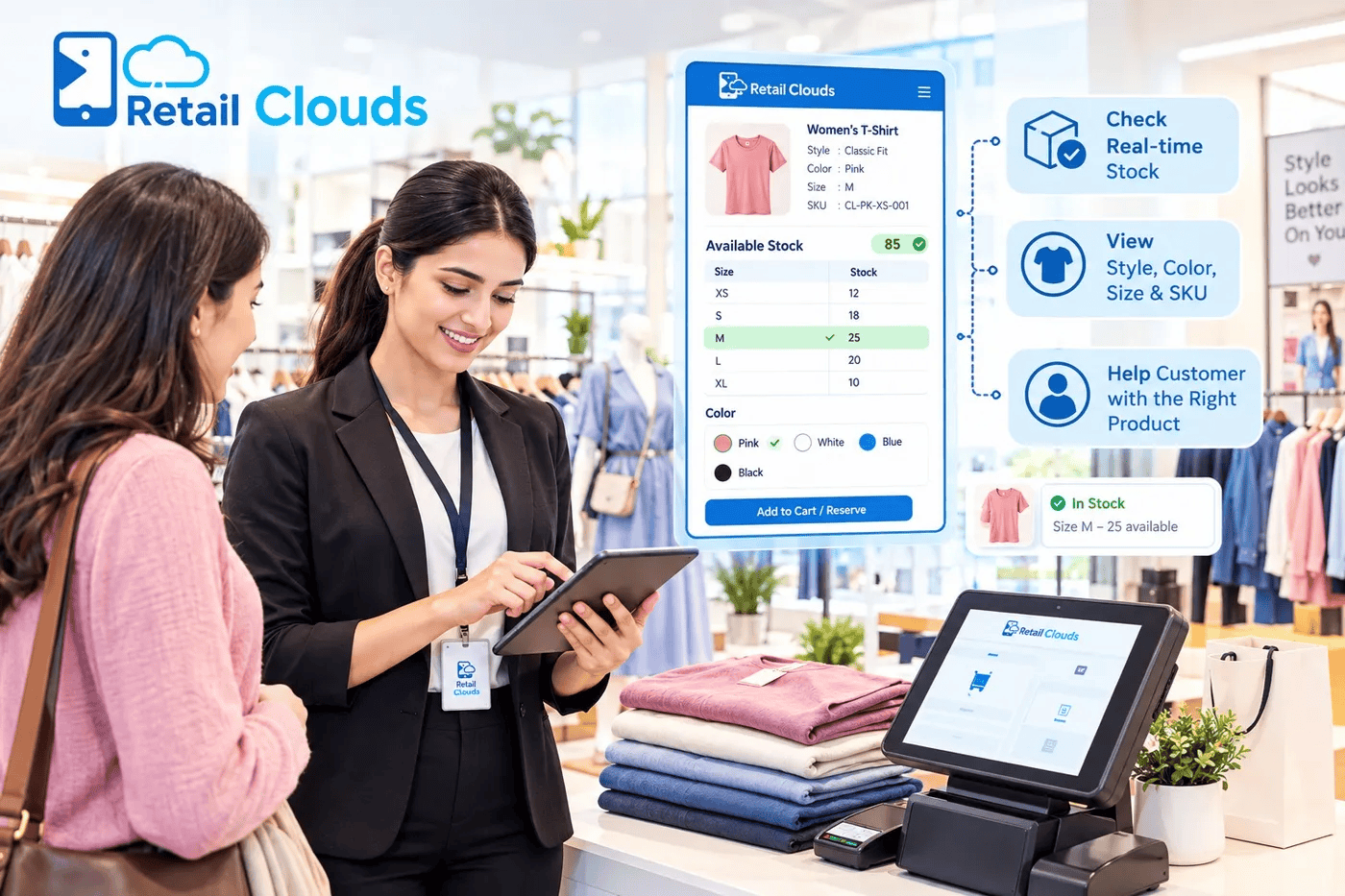
A customer may ask, “Do you have this shirt in size XL at another store?” The salesperson should be able to answer immediately.
- Current store stock
- Warehouse stock
- Stock at other outlets
- Reserved stock
- In-transit stock
- Online inventory
- Available-to-sell inventory
This enables a salesperson to locate the required product even when it is not available in the current store, reducing lost sales caused by out-of-stock situations.
1.3 Empower salespeople with mobile applications
In modern fashion retail, the salesperson should not be restricted to a fixed POS terminal. A salesperson should have access to a mobile application that supports product discovery, stock lookup, promotions and customer assistance.
- Search products
- Check stock
- Find products in other stores
- View promotions
- Check customer information
- Create orders
- Assist customers
- Initiate checkout
- Support endless-aisle selling
1.4 Flexible discounts and promotions
Fashion retailers frequently run seasonal, festival, brand, category, quantity, customer-specific, store-specific and clearance promotions.
Fashion retail software should support both manual discounts and configured promotional rules.
1.5 Multi-store inventory and stock transfers
Fashion retailers often operate multiple outlets. Inventory may need to move between warehouse, stores and other stores.
- Stock transfers
- Inter-store transfers
- Stock requests
- Stock indent
- Transfer approval
- Goods receipt
- Inventory reconciliation
- In-transit stock tracking
1.6 Stock indent and replenishment
The software should allow stores to raise an indent/request for stock when inventory levels fall below required levels. A good fashion retail software must allow auto indent generation by taking sales, current stock and lead time into account.
It must also support both pull and push models. In the pull model, the store staff are responsible for maintaining the optimum stock. In the push model, the warehouse/procurement team ensures that stock arrives in the right quantities at the right time.
1.7 ERP integration and real-time stock visibility
Many large fashion retailers already operate an ERP system. The fashion retail platform must integrate seamlessly with the ERP.
- Product master
- Pricing
- Inventory
- Purchase information
- Stock transfers
- Sales
- Customers
- Financial transactions
The objective is simple: one reliable view of inventory across the retail ecosystem.
1.8 Fashion retail software must be omnichannel
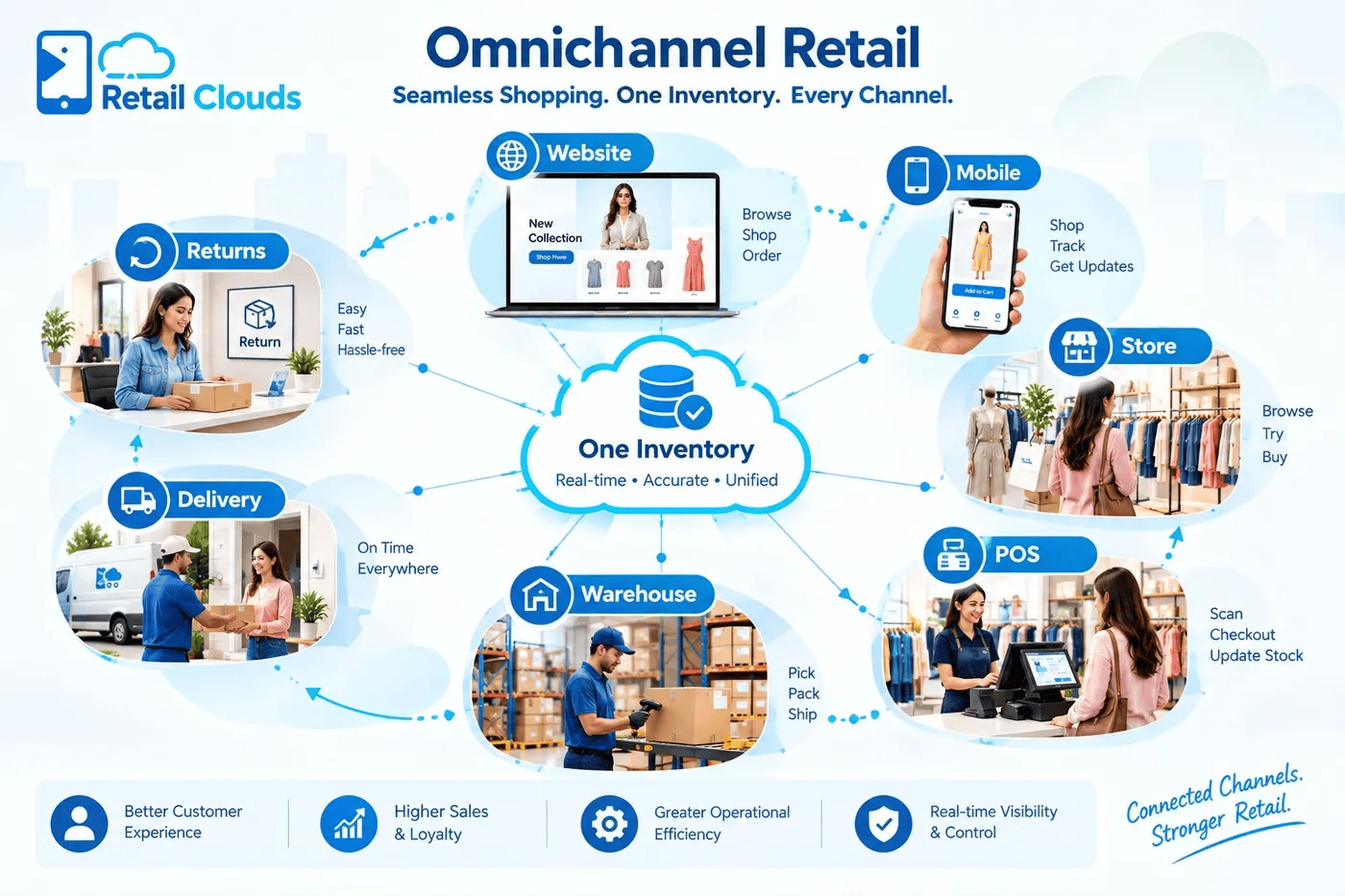
Modern customers do not think in terms of channels. A customer may discover a product online, visit a store, ask a salesperson about another size, purchase from the store and later return through another channel.
- Physical stores
- POS
- eCommerce
- Mobile applications
- Marketplaces
- Warehouse
- Customer service
- Delivery
- Returns
1.9 eCommerce is no longer optional
For modern fashion retailers, an online presence is increasingly essential. The eCommerce platform should not operate as a disconnected website; it should be connected to the retail ecosystem.
- Browse products
- Check availability
- Place orders
- Make payments
- Select delivery
- Select store pickup
- Track orders
- Return products
1.10 Door delivery and logistics integration
A modern fashion retail platform should connect order management with fulfillment and logistics.
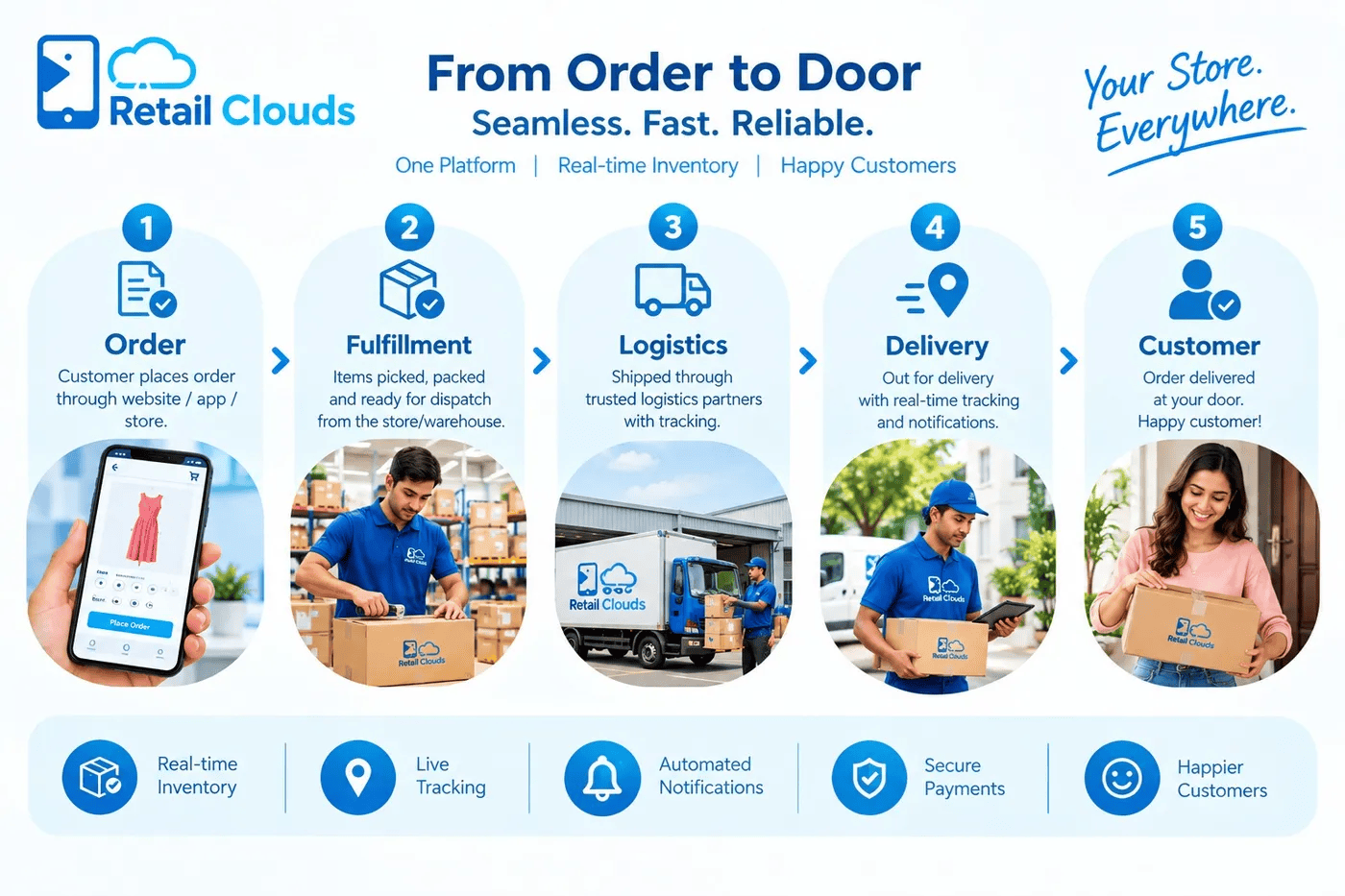
- Shipment creation
- Delivery assignment
- Tracking
- Delivery status
- Proof of delivery
- Returns
- Reverse logistics
2. Advanced features
Modern fashion businesses need more than standard retail operations. Using AI for critical requirements like customer behavior analysis is becoming inevitable.
2.1 AI-driven customer behavior analysis
Every customer interaction can generate valuable customer intelligence. AI can analyze purchase history and behavioral signals to identify patterns and opportunities.
- Products viewed
- Products purchased
- Purchase frequency
- Average transaction value
- Preferred categories
- Preferred brands
- Preferred sizes
- Preferred colors
- Discount sensitivity
- Store visits
- Online behavior
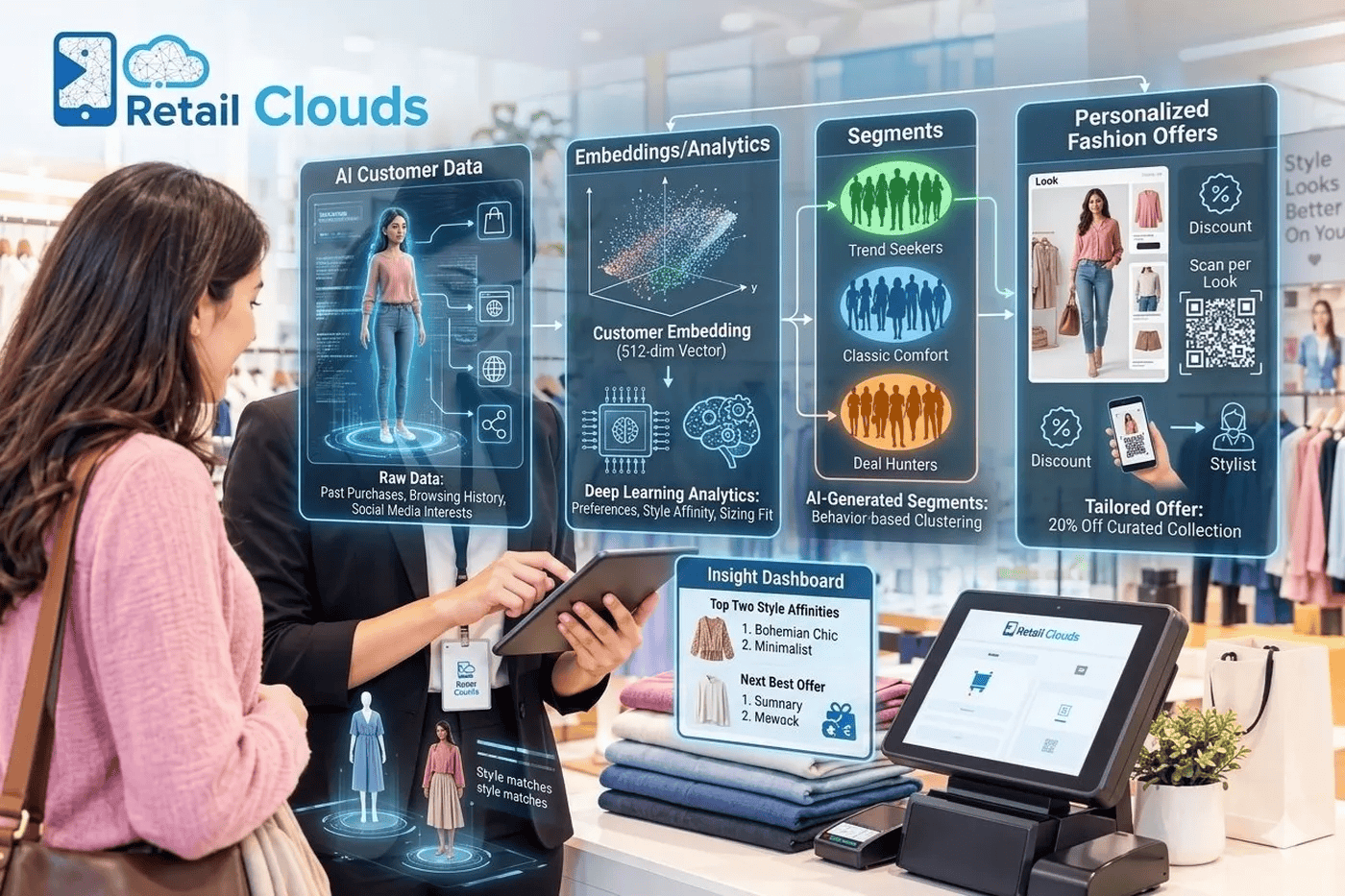
Customer analytics can go one step further. Instead of only asking what a customer purchased, AI can attempt to identify what the customer is likely to purchase next.
- Targeted promotions
- Cross-selling
- Upselling
- Customer retention
- Campaign optimization
- Inventory planning
- Personalized recommendations
2.2 Customer segmentation
AI-based customer segmentation can help fashion retailers understand different customer groups and create more targeted campaigns.
- Premium customers
- Frequent shoppers
- New customers
- Seasonal shoppers
- High-value customers
- At-risk customers
- Brand-loyal customers
- Discount-sensitive customers
2.3 IoT and proximity analytics
Physical stores can generate valuable behavioral signals through IoT and proximity technologies, including footfall, dwell time, product-area visits and customer movement patterns.
- POS data
- Customer data
- Online data
- Store behavior
- IoT data
- Richer customer intelligence
2.4 Virtual trials and digital fashion experiences
Fashion is highly visual and experiential. Virtual trial technologies can allow online customers to visualize products before purchasing.
- Virtual try-on
- Digital fitting
- Product visualization
- AI-assisted recommendations
- Personalized styling
2.5 AI-driven demand forecasting
Fashion retailers face a difficult inventory problem. Too much inventory can lead to markdowns and margin loss, while too little inventory can lead to stock-outs and lost sales.
- Historical sales
- Seasonality
- Product performance
- Store performance
- Promotions
- Customer behavior
- Location
- Trends
- Inventory availability
Choosing fashion retail software
When selecting fashion retail software, retailers should avoid evaluating the solution only by asking: “Does it have POS?”
The more important question is: “Can this platform support the complete fashion retail journey-from product creation and inventory management to customer engagement, omnichannel commerce and AI-driven retail intelligence?”
The right platform should connect stores, customers, inventory, eCommerce, warehouse, employees and intelligent analytics into one ecosystem.
Retail Clouds for fashion retail
Retail Clouds is designed around this broader vision of connected retail. For fashion retailers, the platform can bring together:
- POS
- Product management
- Inventory
- Multi-store operations
- Mobile salesperson
- eCommerce
- Omnichannel
- Customer analytics
- AI
- Delivery
This allows fashion retailers to move beyond traditional billing software and build a more intelligent, connected and customer-centric retail operation.
From POS to intelligent fashion retail
The future of fashion retail is not simply about faster billing. It is about understanding the customer, managing inventory intelligently, empowering store employees, connecting physical and digital channels, and using AI to make better retail decisions.
Modern fashion retail software should therefore be more than a POS system. It should be an intelligent omnichannel retail platform for the entire fashion business.