


Retail Software Evolution
From walk-in POS to cloud and AI-driven stores
Retail software has changed dramatically as technology has advanced. What began as a simple point-of-sale (POS) system in a single store has grown into a connected, cloud-based platform that spans stores, websites, mobile apps and warehouses. This document walks through that journey, era by era.
1. The Store-Only Era (Before the Dot-Com Boom)
Before the dot-com boom, retail meant customers walking into a store, and software meant the POS. There was no other sales channel.
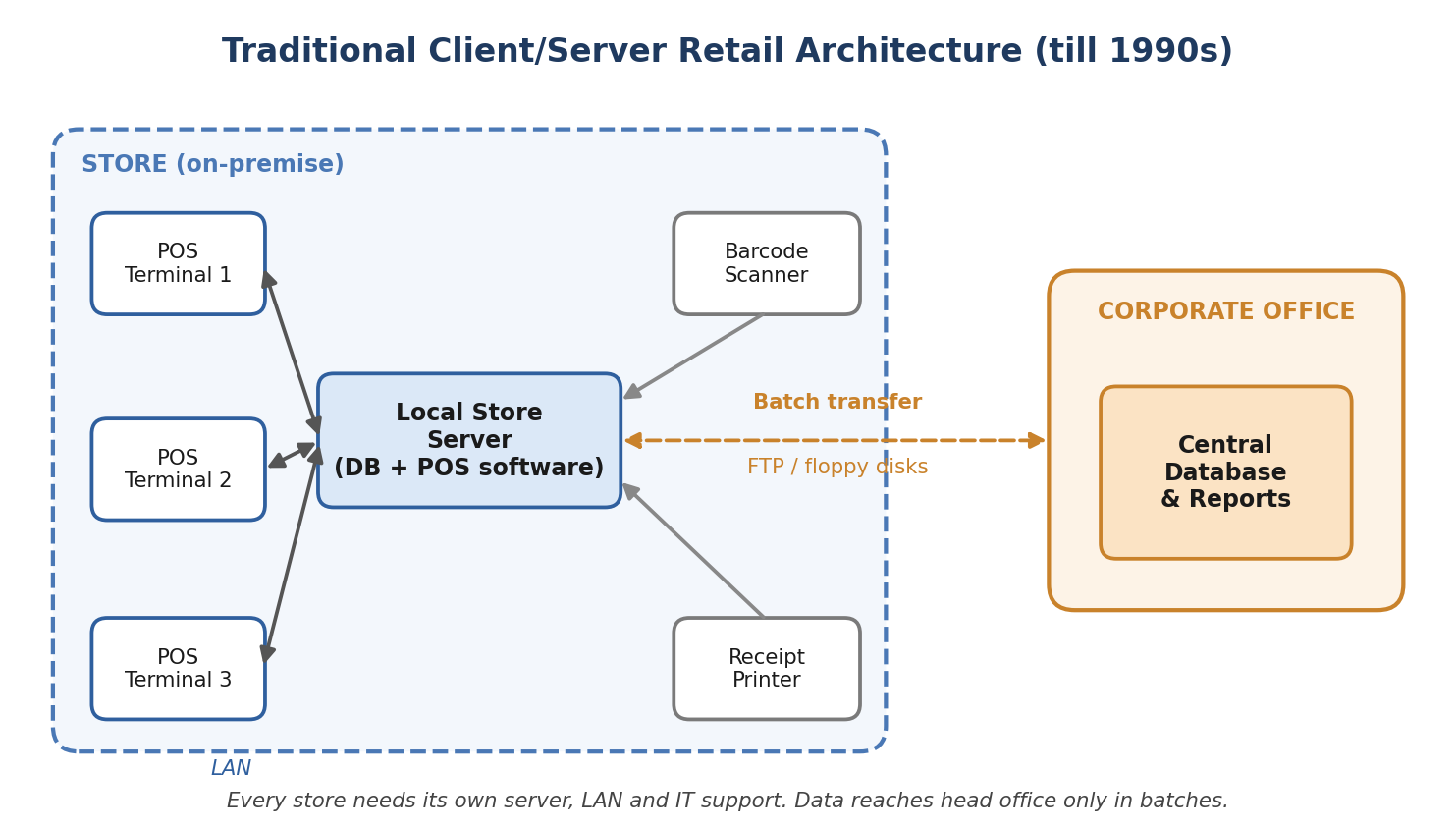
Each store ran a traditional client/server system: a local server in the store, POS terminals connected to it over a LAN, and no link to the outside world. Sales data reached the corporate office in batches, using FTP or, in some cases, floppy disks. This remained the norm through the 1990s.
2. The Dot-Com Boom and Online Sales
After Y2K, companies began building websites and selling online. Electronic payments and payment gateways followed, and online selling soon became an essential part of every sales strategy. Retailers now had a second channel to manage alongside the store.
3. The Mobile Revolution
Cheap, widely available internet brought the mobile revolution. Google Maps, Android and iOS devices arrived, and mobile became a sales channel within the online business. Today, mobile devices are used heavily in both warehouses and outlets, from handheld POS to inventory scanning.
Even so, most systems still ran on the local client/server model. Every store had its own server, and every device connected to it.
4. The Cloud Era
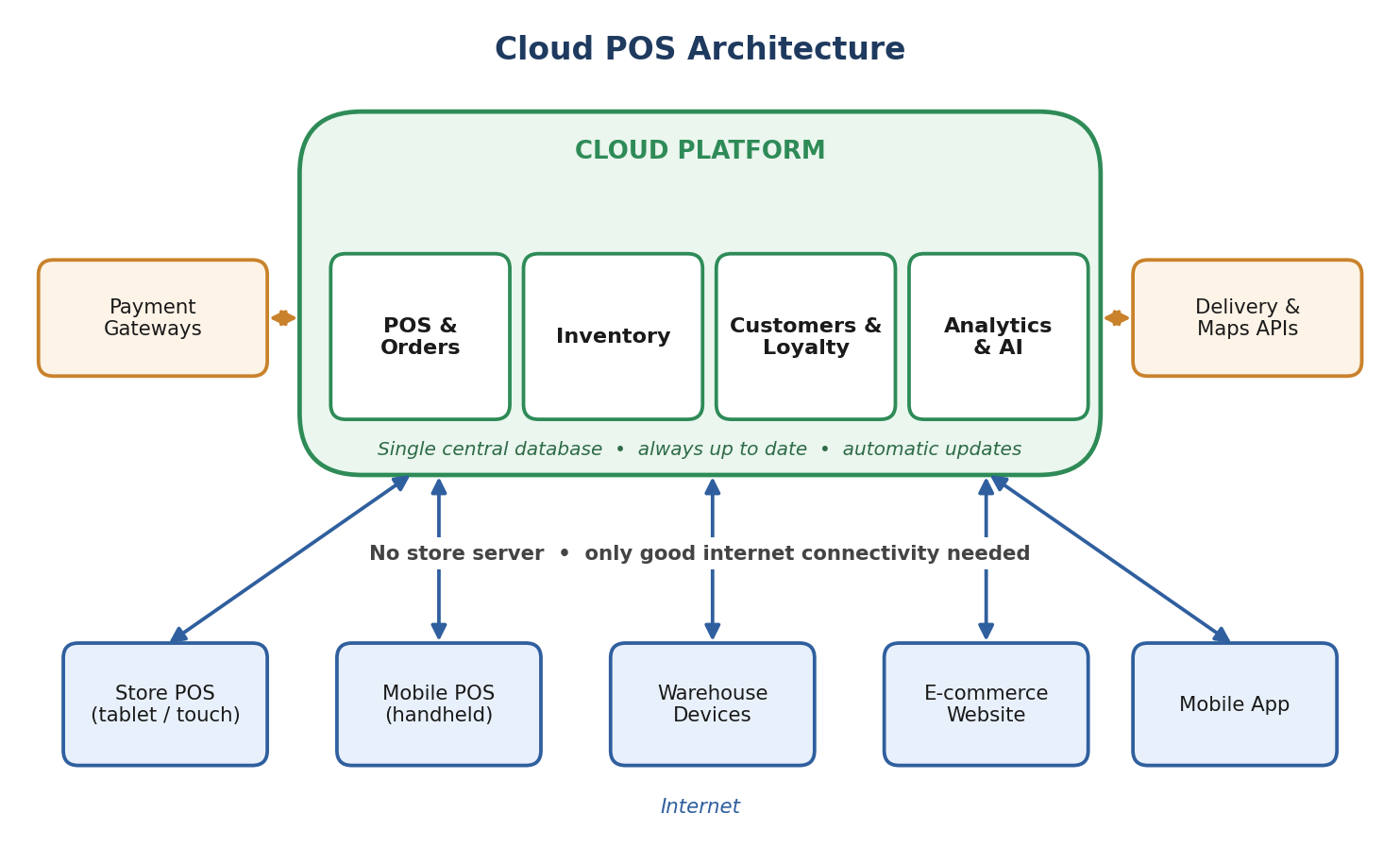
Cloud technology changed this. Stores no longer need their own servers or on-site infrastructure; all they need is a reliable internet connection. Stores become lighter and smarter, and the business gains clear advantages:
- Lower cost: no store servers to buy, maintain or replace.
- One source of truth: sales, inventory and customer data are updated in real time across every channel.
- Easy rollout: new stores can open quickly, and software updates are applied centrally.
- Scalability: capacity grows with the business, for example during peak seasons.
5. The AI Revolution
Retail is now going through another shift, driven by artificial intelligence. As in other industries, the impact on retail has been unprecedented. Outlets are becoming smarter and, increasingly, unmanned. Combined with IoT devices such as sensors and smart shelves, AI is expected to bring high levels of automation, and in time fully automated, staff-free stores.
Summary Timeline
| Era | Sales channels | Technology |
|---|---|---|
| Up to 1990s | Walk-in store only | Client/server POS, LAN, FTP/floppy |
| Post-Y2K | Store + online | Websites, payment gateways |
| Mobile era | Store + online + mobile | Android/iOS, Google Maps, mobile devices in outlets and warehouses |
| Cloud era | Omnichannel | Cloud POS, no store servers |
| AI era | Smart, unmanned stores | AI + IoT, automation |